
Federal Law
What Is Sarbanes-Oxley and How Does It Affect Data Destruction?
The Sarbanes-Oxley Act of 2002 (SOX) governs financial recordkeeping for public companies and makes the improper destruction of records a federal crime. SOX requires retention of audit and financial records before any media reaches end of life. All Green Recycling's data destruction processes are operationally aligned to lawful end-of-life destruction once the retention period and any legal hold have been satisfied.
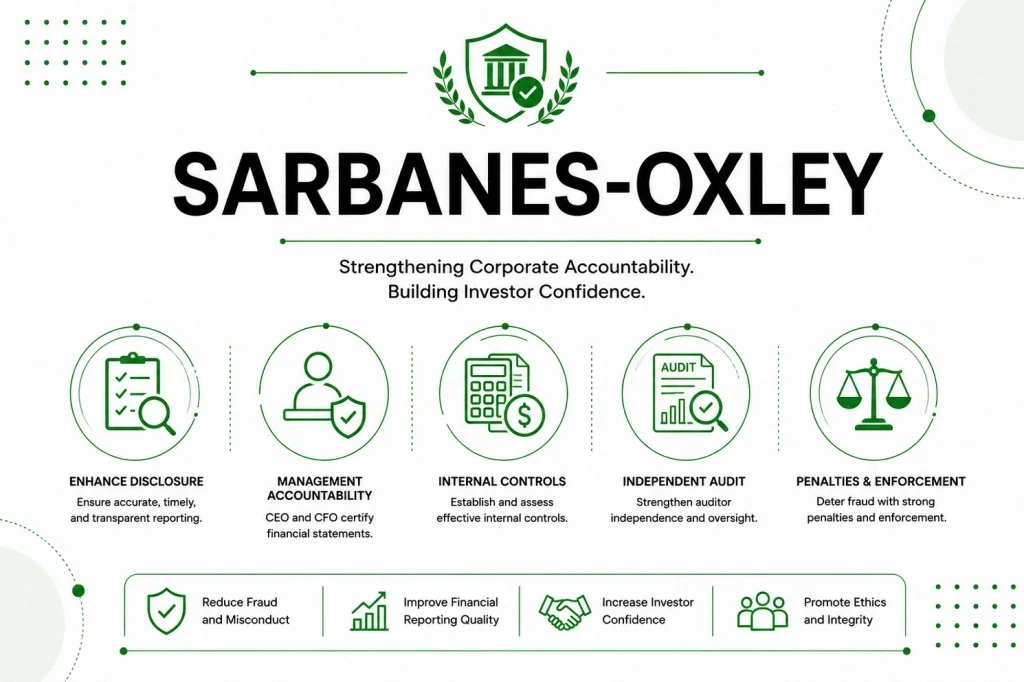
What Is Sarbanes-Oxley and How Does It Affect Data Destruction?
The Sarbanes-Oxley Act of 2002 (SOX) is the federal law that reformed corporate financial reporting and accountability for public companies after the Enron and WorldCom failures. For data destruction, SOX matters in two ways: it mandates retention of financial and audit records for defined periods, and it makes the knowing destruction of records to obstruct an investigation a federal crime.
Publisher: U.S. Congress; enforced by the Securities and Exchange Commission (SEC) and the Department of Justice (DOJ)
Key citations: §802 (18 U.S.C. §1519, destruction of records); §1102 (18 U.S.C. §1512(c), tampering); SEC rule 17 CFR §210.2-06 (seven-year retention of audit workpapers)
Legal force: Mandatory federal law. Criminal penalties for unlawful destruction; SEC civil enforcement for retention failures.
SOX does not prohibit destruction. It prohibits destruction at the wrong time. Records must be retained through their required period and through any litigation hold. Once those obligations end, end-of-life media holding that data can and should be destroyed securely.
What Does SOX Require for Records and Their Destruction?
SOX requires public companies and their auditors to retain financial and audit records for defined periods, to preserve records subject to investigation or litigation, and to destroy records only after retention obligations and legal holds have lapsed.
Seven-year audit-record retention (17 CFR §210.2-06)
The SEC rule implementing SOX §802 requires accounting firms to retain audit and review workpapers and certain related records for seven years after the conclusion of the audit or review. Public companies maintain corresponding financial records to support their filings.
The anti-destruction statute (18 U.S.C. §1519)
Section 802 makes it a crime to knowingly alter, destroy, mutilate, conceal, or falsify any record with intent to obstruct a federal investigation or matter. This provision carries penalties of up to twenty years of imprisonment. It is the reason destruction must never proceed against records under investigation or hold.
Legal hold and litigation preservation
When litigation or a federal investigation is reasonably anticipated, the company must suspend routine disposal of relevant records through a legal hold. Media within the scope of a hold are excluded from destruction until the hold is released.
Lawful end-of-life destruction
After the seven-year period elapses and no hold applies, the underlying media can be destroyed. Secure destruction at that stage supports data-minimization and reduces breach exposure without conflicting with SOX retention.
Internal-control implications (Section 404)
SOX Section 404 requires management to assess and report on the effectiveness of internal control over financial reporting, and auditors to attest to it. A records-management and disposition program is part of that control environment. Disposing of financial-record media without a documented, authorized process is itself a control weakness, even when the retention period has passed, because it shows the company cannot demonstrate disciplined handling of the systems that produce its financial statements. A serialized destruction record is evidence that the disposition control operated as designed.
Format-neutral retention
The retention obligation applies to records regardless of medium. Financial records and audit workpapers may live on servers, backup tapes, archival drives, and in paper form, and all copies are subject to the same retention clock and legal-hold discipline. A company cannot satisfy retention by keeping a paper copy while prematurely destroying the electronic source, nor can it destroy a backup tape that still falls within the window. End-of-life destruction must therefore account for every medium on which a covered record resides.
How All Green Recycling Aligns to SOX Data Retention
All Green Recycling’s data destruction processes are operationally aligned to lawful end-of-life destruction under SOX. The company destroys media on the client’s authorization, after the client confirms that retention periods and legal holds have been satisfied, and it documents exactly what was destroyed and when.
| SOX-related need | All Green Recycling control |
|---|---|
| Destroy only after retention lapses | Client-authorized scheduling; serialized inventory of approved media |
| Prove what was destroyed and when | Certificate of Destruction with date and serialized list |
| Defensible destruction record | Witnessed Destruction with signed log |
| Secure end-of-life disposition | Hard Drive Shredding at NIST Destroy level |
All Green Recycling does not claim “SOX certification.” SOX is a federal statute, not a certification scheme. The company supports the client’s retention governance by destroying only authorized media and by issuing a dated Certificate of Destruction that records the destruction event, which becomes part of the client’s own retention and disposition evidence.
This sequencing is what makes the destruction defensible. Because the company acts only on a client authorization that confirms the retention period has elapsed and no hold applies, the destruction event is tied to a deliberate governance decision rather than a routine cleanup. The dated, serialized certificate then lets the client demonstrate to auditors or a court that the media was destroyed lawfully, after its obligations ended, which is precisely the distinction the anti-destruction statute draws between proper disposal and obstruction.
Who Must Comply With SOX?
SOX applies to publicly traded companies registered with the SEC, their officers and directors, and the registered public accounting firms that audit them. The anti-destruction provision in 18 U.S.C. §1519 reaches more broadly, applying to anyone who destroys records to obstruct a federal matter.
A public company finance department retiring accounting servers, an accounting firm decommissioning workstations that held client workpapers, and a subsidiary managing its own records all operate under SOX retention discipline. The practical rule for media disposal is uniform: confirm the retention period has elapsed and no legal hold applies, then destroy and document.
The anti-destruction statute at 18 U.S.C. §1519 widens the net well beyond SEC registrants. Because it criminalizes destroying any record to obstruct a federal matter, it reaches private companies, nonprofits, and individuals who are not otherwise subject to SOX retention rules. The practical takeaway for any organization is the same: never destroy records that are under investigation or a litigation hold, and document the authorized destruction of records that have cleared their retention obligations. Routing approved media through Data Destruction with a Certificate of Destruction creates that documentation.
Enforcement and Consequences
SOX is enforced by the SEC through civil actions and by the Department of Justice through criminal prosecution. The consequences for unlawful destruction are among the most severe in federal data law.
Criminal penalties (18 U.S.C. §1519): Knowingly destroying records to obstruct a federal investigation is punishable by fines and up to twenty years of imprisonment. The provision was applied to the destruction of audit documents in the prosecution that followed the Enron collapse.
SEC enforcement: Failure to retain required audit workpapers exposes an accounting firm to SEC sanctions, including fines and practice restrictions.
Spoliation and litigation: Destroying media subject to a legal hold can result in court sanctions for spoliation, adverse-inference instructions, and case-dispositive penalties in civil litigation.
Frequently Asked Questions
Does SOX prohibit destroying data?
No. SOX prohibits destroying records at the wrong time, not destruction in general. Records must be retained through their required period, which is seven years for audit workpapers under SEC rule 17 CFR §210.2-06, and through any legal hold. Section 802 (18 U.S.C. §1519) criminalizes destroying records to obstruct a federal matter. Once retention obligations and holds have lapsed, end-of-life media can and should be destroyed securely.
Is SOX compliance mandatory or voluntary?
SOX compliance is mandatory for publicly traded companies, their officers, and their auditors under federal law. The retention requirements are enforced by the SEC, and the anti-destruction provisions are enforced criminally by the Department of Justice, with penalties reaching twenty years of imprisonment for obstructive destruction. The anti-destruction statute applies broadly, beyond public companies, to anyone who destroys records to obstruct a federal investigation.
How does All Green Recycling support SOX data retention?
All Green Recycling supports SOX retention by destroying only the media a client has authorized, after the client confirms retention periods and legal holds have been satisfied, and by issuing a dated Certificate of Destruction with a serialized inventory. That record documents exactly what was destroyed and when, which becomes part of the client’s disposition evidence. All Green Recycling provides the destruction action and documentation; the retention decision remains with the client.
What is the SOX retention period before media can be destroyed?
The SEC rule implementing SOX requires accounting firms to retain audit and review workpapers for seven years after the audit or review concludes, and public companies maintain corresponding financial records to support their filings. Media holding those records should not be destroyed until the seven-year period has elapsed and no legal hold applies. After that, secure destruction supports data-minimization without conflicting with SOX.
Does SOX apply only to public companies?
The retention rules under SEC authority apply to public companies and their registered auditors, but the anti-destruction statute at 18 U.S.C. §1519 is far broader. It makes it a federal crime for anyone to knowingly destroy, alter, or conceal a record with intent to obstruct a federal investigation or matter, regardless of whether the person works for a public company. A private business, a nonprofit, or an individual can therefore violate it. The universal lesson for media disposal is to suspend destruction of any records that are under investigation or litigation hold, and to document the authorized destruction of records that have cleared their retention obligations.
What happens if media under a legal hold is destroyed?
Destroying media subject to a legal hold can constitute spoliation of evidence and, where done to obstruct a federal matter, a violation of 18 U.S.C. §1519 carrying criminal penalties. Civil courts can impose sanctions including adverse-inference instructions and case-dispositive rulings. For this reason All Green Recycling destroys only media a client has explicitly authorized after confirming no hold applies, and the Certificate of Destruction records the authorized scope.
How does SOX retention interact with secure destruction goals?
SOX retention and secure destruction are sequential, not contradictory. During the retention period the data must be preserved; after it elapses, secure destruction reduces the breach surface and supports data-minimization. A disciplined program retains records for the required seven years, releases them from hold, then routes the end-of-life media to Hard Drive Shredding with a documented Certificate of Destruction, satisfying both the retention rule and sound data governance.
Who decides when SOX-covered media is ready for destruction?
The retention and legal-hold decision belongs to the client, not the destruction vendor. The company’s records-management function, in coordination with legal and the auditors, confirms that the seven-year period has elapsed and that no investigation or litigation hold covers the records. Only then is the media released for disposal. All Green Recycling acts on that authorization: it destroys exactly the serialized devices the client approves and records the date and scope on the Certificate of Destruction. This division keeps the retention judgment with the party that owns the records while giving the company independent evidence that destruction occurred lawfully and on a defined date.
Need secure disposal services that satisfy What Is Sarbanes-Oxley and How Does It Affect Data Destruction??
Bonded · Insured · Certificate of Destruction · Methods follow What Is Sarbanes-Oxley and How Does It Affect Data Destruction?